
The Phantom Limb of the Soul: Understanding ‘Ketu’ and the Psychology of Letting Go
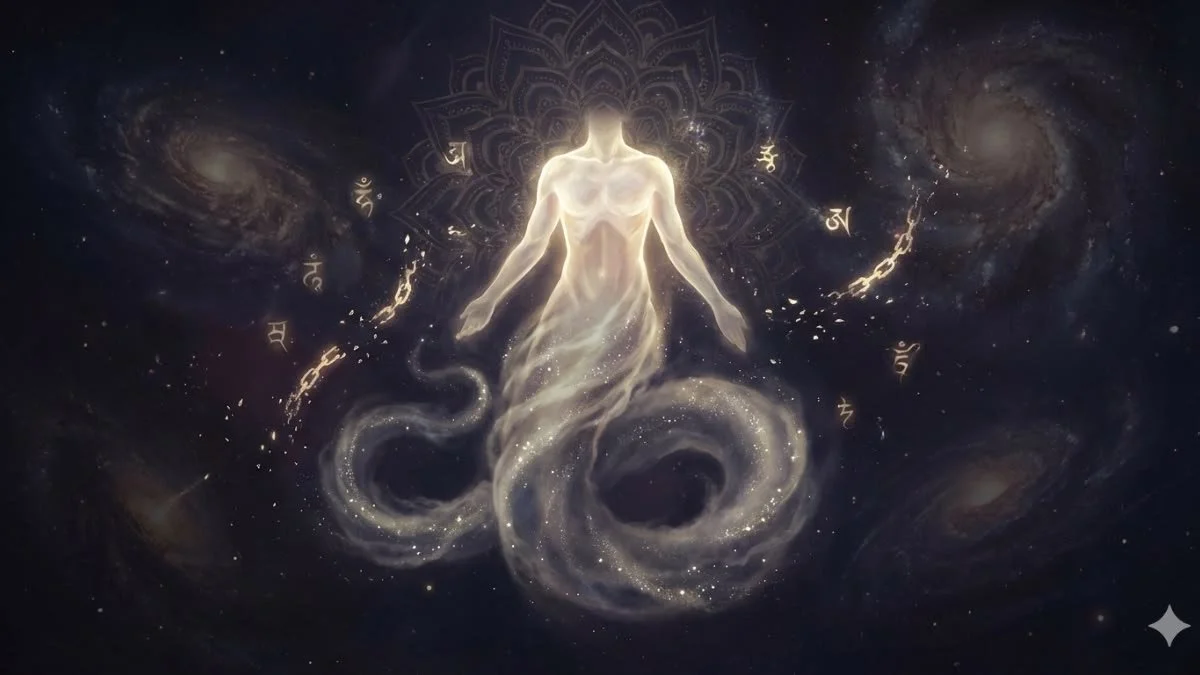
Have you ever met someone who possesses an absolute, undeniable genius for a specific skill, but they simply do not care about it?
Maybe they are a brilliant musician who rarely picks up a guitar, or a natural-born entrepreneur who walks away from a thriving business because they just feel completely indifferent to the success. From the outside, it looks like self-sabotage or wasted potential. People constantly ask them, "Why aren't you using your gift?"
Their answer is usually a shrug. They just feel a deep, unshakeable sense of "been there, done that."
In modern psychology, we might label this as burnout, apathy, or depression. But thousands of years ago, ancient observers mapped this exact human experience to a specific shadow in the sky.
They called it Ketu.
If Rahu (the North Node) is the psychological drive of endless hunger and ambition, Ketu (the South Node) is the exact opposite. It is the psychology of extreme detachment, spiritual surrender, and letting go. Understanding how Ketu operates in your mind is the key to figuring out why you feel disconnected from certain parts of your life, why you carry unexplainable fears, and how to access the deepest intuition you possess.
The Body Without a Head: The Science of Apathy
To understand how Ketu feels in your everyday life, we have to look back at the same myth that created Rahu.
When the gods and demons churned the cosmic ocean, a demon managed to steal a sip of the nectar of immortality. The creator threw a weapon and sliced the demon in half. The severed head became Rahu—a mouth with no stomach, endlessly hungry but never satisfied.
The severed tail became Ketu.
Think about the psychological reality of a body with a stomach, but absolutely no head or mouth. Ketu has already digested everything. It is entirely full. It cannot taste, it cannot seek out new flavors, and it has zero appetite.
In your psychological makeup, Ketu represents your past. According to Eastern philosophy, this includes past lives. Wherever Ketu sits in your chart, it points to the exact themes, skills, and environments that your soul has already mastered a hundred times over. You are born naturally good at these things. They require zero effort.
But because you have already mastered them, the soul has no desire to pursue them anymore. The appetite is gone. This is why Ketu creates such profound apathy. It is the ultimate comfort zone, but it is a comfort zone that feels incredibly boring. When you try to build your entire life around the things Ketu represents, you will inevitably feel a lingering sense of emptiness, no matter how outwardly successful you become.
The Phantom Limb and Subconscious Dread
Because Ketu is the tail of the serpent, it operates completely in the dark. It rules the unseen world, the subconscious, and the things we feel but cannot physically touch.
This creates a fascinating psychological phenomenon. Medical science recognizes "phantom limb syndrome," where a person who has lost an arm still feels an itch or a pain where the arm used to be. The physical structure is gone, but the nervous system still holds the memory.
Ketu is the phantom limb of the soul.
It holds the deep, cellular memories of traumas, experiences, and instinctual reactions from the past. Because of this, Ketu is responsible for irrational phobias. If you have an intense, paralyzing fear of something completely illogical—like a primal terror of creeping animals, an absolute dread of deep water, or a suffocating fear of small spaces—despite never having a traumatic experience with them in this lifetime, you are dealing with Ketu.
Your nervous system is firing off a threat response based on a shadow memory. The logical brain cannot override it because the fear does not come from logic. It comes from the tail of the serpent.
Where the Tail Rests: Ketu in Your Life
Just like a physical map, your birth chart is divided into twelve sections, or "houses," each representing a different arena of human life. Wherever Ketu was positioned the exact minute you were born determines where you will experience this intense detachment, innate mastery, and sudden desire to walk away.
Here is how the shadow of the tail manifests across the human experience:
The Arena of Identity and Partnerships
If Ketu influences the area of your chart governing your self-image, you might struggle with a sense of invisibility or a complete lack of ego. You likely do not care about personal branding, physical appearance, or being the center of attention. You are highly self-sufficient, but you might struggle to advocate for yourself in the real world.
If Ketu falls in the area governing your partnerships, the apathy is projected onto relationships. You likely have an innate ability to attract partners, but you might feel a constant, nagging desire to be alone. You might walk away from perfectly good relationships simply because you feel suffocated by the demands of normal social contracts. The lesson here is learning how to connect without feeling like you are losing your ultimate freedom.
The Arena of Money and Hidden Truths
When Ketu lands in the section of your chart tied to accumulated wealth and family, you might experience a strange detachment from material security. You could inherit money or make it easily, but you simply do not care about hoarding it. You might give it away or lose it because you refuse to manage it closely.
If Ketu is buried in the deepest, most hidden parts of your chart, it creates a profound natural talent for research, psychology, and the occult. You are a human lie-detector. You can see straight through people's masks. However, this placement can also trigger massive, unexplainable anxieties, forcing you to learn how to surrender control and trust the unseen universe.
The Arena of Home and Career
If Ketu sits in the area representing the home and roots, you might feel like you never truly belong anywhere. You could move from city to city, or country to country, always feeling like a foreigner. You have a deep detachment from your homeland or your family traditions, searching instead for a spiritual home rather than a physical one.
When Ketu climbs to the area ruling your career and public standing, you experience the classic "reluctant leader" syndrome. You might achieve massive public success, only to find the spotlight exhausting and hollow. People with this placement frequently walk away from high-status careers at the peak of their success to pursue something entirely quiet and private.
The Arena of Conflict and Ultimate Liberation
In the area of daily routines and conflicts, Ketu makes you completely disinterested in office politics, petty arguments, and standard 9-to-5 schedules. You have a natural ability to heal others, but you might neglect your own physical body or daily responsibilities.
If Ketu hides in the final area of the chart—the arena of isolation and liberation—it is considered highly spiritual. Your soul is deeply pulling you toward quiet, retreat, and letting go of the material world. The challenge is ensuring that this desire for spiritual peace does not turn into unhealthy isolation or running away from your real-world responsibilities.
The Blade of Surrender
Ketu is often described as a blade. When we desperately cling to a job, a relationship, or an identity that we have outgrown, Ketu acts as the cosmic knife that cuts the attachment.
This is why Ketu periods in a person's life often involve sudden, unexpected losses. The universe is not punishing you. The tail of the serpent is simply stripping away the things that are preventing you from growing. It takes away the material things you are obsessed with so you can finally realize that your true security comes from within.
You cannot fight Ketu. If you try to aggressively control the area of your life where Ketu sits, it will slip right through your fingers like sand.
The only way to master the energy of Ketu is through total, radical surrender. You have to learn to engage with that area of your life without being attached to the outcome. You do the work, you love the partner, you earn the money—but you remain entirely willing to let it all go if it is time for the chapter to end.
Stop Fighting the Shadows. Start Mapping Your Mind.
Understanding the deep, subconscious pulls of Rahu and Ketu is fascinating, but reading about them is very different from actually turning the lights on in your own life.
If you are exhausted by a lingering sense of apathy, if you are carrying phantom fears that make no logical sense, or if you keep walking away from success because it feels strangely hollow, it is time to look at your specific map.
This is what an Astro-Psychology Reading is designed for.
We do not do parlor tricks, and we do not predict doom. Instead, we use the ancient, mathematical architecture of your exact birth chart as a modern psychological diagnostic tool. In a one-on-one session, we will work together to:
Identify Your Blind Spots: Pinpoint exactly where Ketu is creating apathy and phantom fears in your life, so you can stop forcing yourself to care about things your soul has already outgrown.
Decode Your Muscle Memory: Uncover the deep subconscious grooves and karmic patterns that are running your daily decisions on complete autopilot.
Build a Grounded Strategy: Take the massive intuition and natural mastery of your chart and channel it into a practical, real-world action plan that protects your peace and points you toward what you are actually supposed to be doing next.
You do not have to keep fighting an invisible enemy, and you don't have to navigate the chaos alone. Once you know exactly how your mind is wired, you can finally turn off the autopilot and take control of the wheel.
[Explore Astro-Psychology Readings and Book Your Session Here]